
Equipped for Solutions
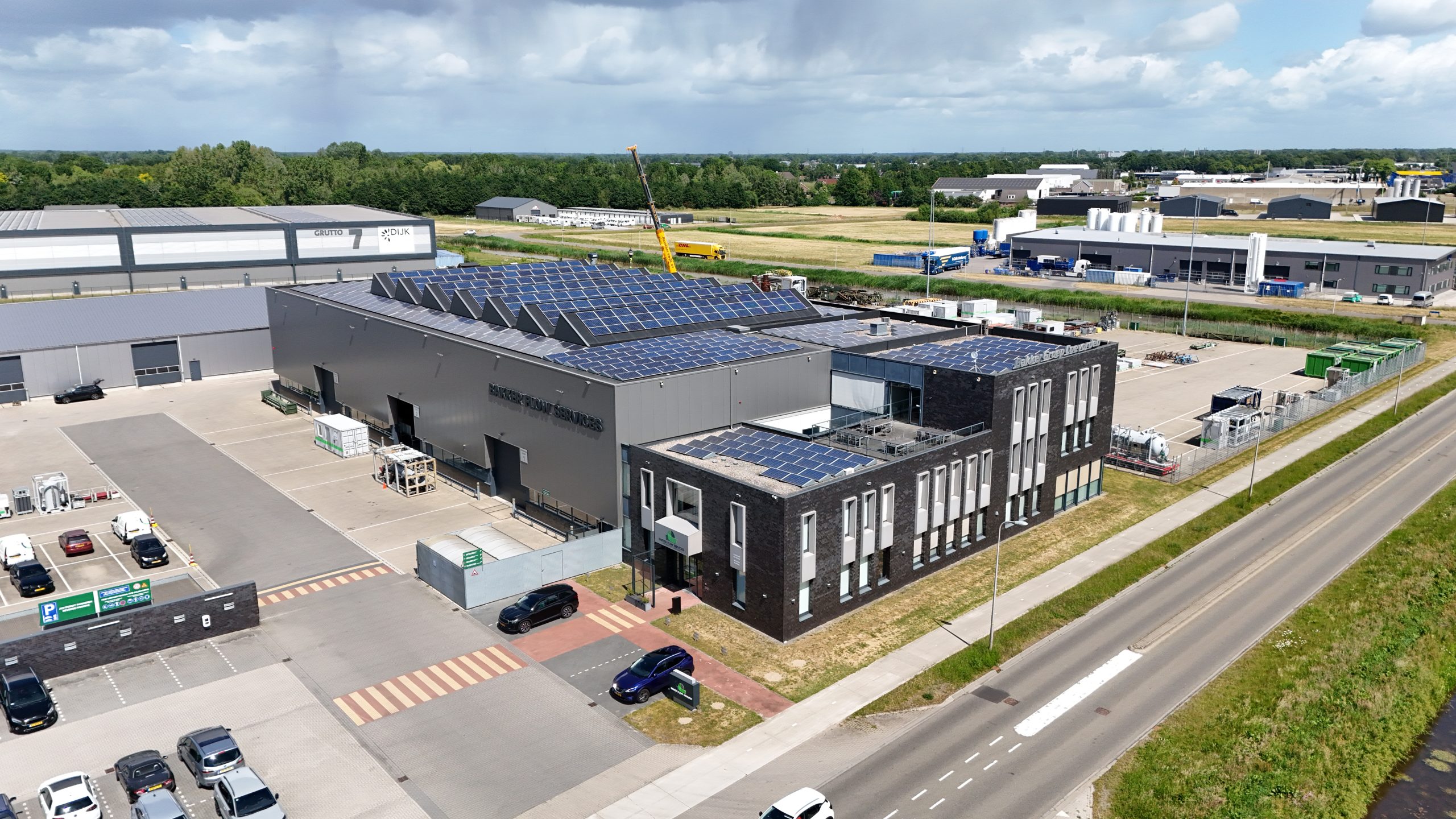
Bakker Flow Services is the full-service partner for the Geothermal, Oil & Gas, and Process Industry.
We deliver integrated, solution-driven services from design to execution, including Well Test Services, Rental, Engineering & Project Management, and Maintenance & Inspection.
Combining decades of expertise with innovative technologies, we provide safe, reliable, and customized turnkey solutions that optimize performance, ensure operational continuity, and address complex technical challenges while maintaining the highest standards of quality, safety, and sustainability.



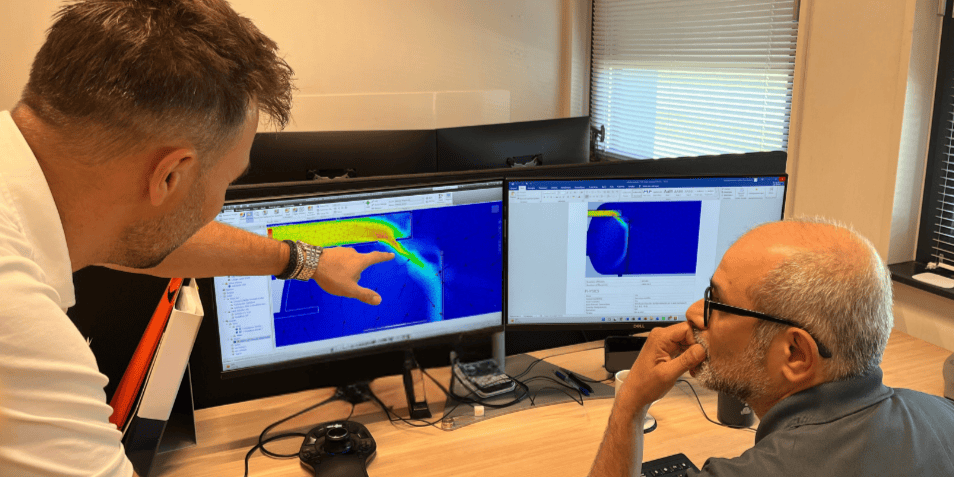
Every industrial project has its own requirements. Whether you are modifying an existing installation, expanding a facility or preparing a new project, the engineering needs to work in practice — not just on paper.
Good preparation is therefore an important part of every project. Clear drawings, the right calculations and a well-defined scope help everyone involved understand what needs to happen before work starts.
At Bakker Flow Services, we combine engineering with project management and practical field experience. This allows us to support projects from the initial technical preparation through to execution and completion.
Our focus is straightforward: prepare the work properly, coordinate the different activities and make sure the engineering fits the reality of the site.
The earlier the technical requirements are clear, the easier it is to plan and execute the project.
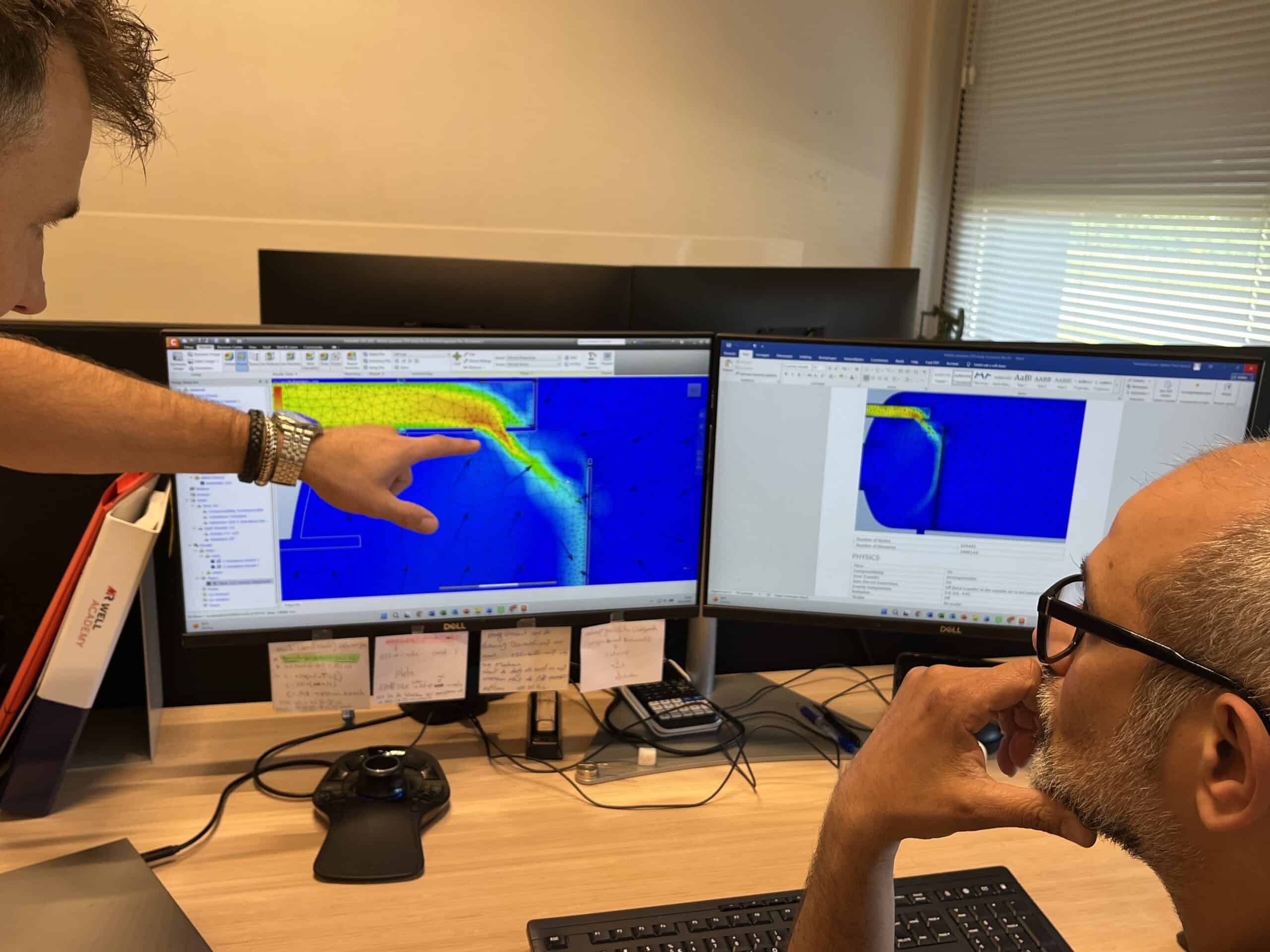
We help turn the initial project requirements into a practical scope of work. Depending on the project, this can include defining the scope, preparing technical documentation, creating drawings, carrying out engineering calculations and coordinating the required activities.
Our engineering and project management services include:
This preparation provides the technical basis for the next stages of the project and gives the teams involved a clear reference for the work ahead.
Once the scope is clear, the engineering needs to be translated into practical documentation and calculations.
For us, engineering is closely connected to field execution. A drawing or calculation needs to reflect the actual installation, available space, equipment and working conditions.
Our team can support with the development and updating of P&IDs and plot plans, giving project and field teams a clear overview of the installation and equipment layout.
We also carry out engineering calculations such as line sizing, heat studies and noise studies, depending on the requirements of the project. (bakkerflowservices.com)
By combining these activities, we can help identify practical issues during preparation rather than when the work is already taking place on site.
Modifying an existing facility can require a different approach from building something new. Existing equipment, piping, available space and operating conditions all need to be taken into account.
This is where practical experience is important.
When preparing engineering for an existing installation, we look at how the new or modified system needs to connect to what is already there. The aim is to develop a solution that can be installed and operated within the conditions of the existing facility.
Depending on the project, this can involve updating P&IDs, preparing plot plans, carrying out calculations and coordinating the engineering work with the planned field activities.
Engineering and execution are closely connected. Once the drawings and calculations are ready, the work still needs to be planned and coordinated.
Our engineering and project management team can support with project planning, phasing, work preparation, coordination, progress monitoring, certificate management and reporting. (bakkerflowservices.com)
This means engineering information remains connected to the project schedule and the work taking place in the field.
When something changes during execution, the impact on the planning and technical scope can be assessed and addressed with the project team.
Our experience in the process industry means that our engineering work is closely connected to real operating environments.
We understand that projects often need to be carried out while other parts of a facility continue to operate. Space can be limited, shutdown windows can be short and equipment and contractors need to be available at the right time.
That practical context is something we take into account when preparing a project.
Whether the project involves a new installation, a modification to an existing facility or temporary equipment for a specific operation, we can combine engineering and project management with our other technical services where required.
Depending on the project, engineering is only one part of what is needed.
Our other services can be brought into the project where they add value. For example, our team can support with maintenance and inspection or provide temporary equipment through our rental services.
This can be useful when a project involves inspection, pressure testing, temporary flowlines or other equipment alongside the engineering work.
By combining these capabilities, we can support different parts of a project without losing sight of the overall scope and planning.
Good engineering should result in a solution that can actually be built, operated and maintained.
That is how we approach our work at Bakker Flow Services. We combine engineering knowledge with practical experience from the field and project management experience in the process, oil & gas and geothermal industries.
We do not aim to make projects more complicated than they need to be. We focus on understanding the requirements, preparing the right technical information and coordinating the work needed to move the project forward.
If you are preparing a new project, modifying an existing installation or need engineering support for an upcoming field activity, contact our team. We can discuss the scope and determine how we can support you.
Q: What engineering services do you provide?
A: Depending on the project, we provide work preparation, scope definition, P&IDs, plot plans, line sizing, engineering calculations, heat studies and noise studies. We can combine this with project management and coordination. (bakkerflowservices.com)
Q: Can you support modifications to an existing installation?
A: Yes. We support projects in existing facilities as well as new installations. For modifications, we take the existing equipment, layout and operating conditions into account when preparing the engineering and project documentation.
Q: Do you provide full EPC services?
A: Our focus is on engineering, technical preparation, planning and project management. We do not position ourselves as a full EPC contractor responsible for the complete procurement and construction of every project. Depending on the scope, we can coordinate with the contractors and suppliers involved in the execution.
Q: Can you support the project after the engineering has been completed?
A: Yes. Our project management services can continue through preparation and execution, including planning, phasing, coordination, progress monitoring, certificate management and reporting. (bakkerflowservices.com)
Q: Do you only work on large industrial projects?
A: No. We support projects of different sizes and scopes. The approach depends on what the project requires, whether that is a specific engineering calculation, preparation of technical documentation or broader project management support.
Q: What makes your engineering approach practical?
A: Our engineering work is connected to our practical experience with equipment, maintenance and field operations. This helps us consider how a solution will actually be installed, operated, tested and maintained, rather than looking at the design in isolation.
If you need engineering support for an industrial project, get in touch with Bakker Flow Services. We can discuss your requirements and look at how our engineering and project management team can support the project.
When you are evaluating partners to support the integrity of your process equipment, the market can feel crowded. Many providers focus on complex software platforms and predictive analytics, promising a completely data driven future. But these advanced systems are only as reliable as the data they receive. The real challenge is ensuring the foundational data gathered from your assets in the field is accurate, timely, and trustworthy.
Making the right choice comes down to finding a partner who combines certified technical knowledge with practical field experience. You need someone who can deliver clear, actionable insights that help you maintain operational continuity and safety, forming the bedrock of any successful integrity program.
The process industry is certainly shifting from periodic, reactive maintenance to more continuous, data informed integrity management. This is a positive development that can help reduce risk and optimise asset performance. However, this progress depends entirely on one critical element: accurate field data. Without a reliable process for inspecting assets and verifying their condition, even the most advanced software can lead to poor decision making.
This is why a practical, hands on approach remains essential. Before implementing complex predictive models, you must have confidence in the fundamental inspection data that feeds them. A partner focused on delivering high quality, verifiable inspection results provides the solid foundation needed to manage asset integrity effectively, ensuring safety and compliance are always the top priorities.
As you compare potential partners, your goal is to find a team that can reduce operational risk and help you meet regulatory requirements. Based on what drives decisions for maintenance and project teams, here are the core criteria to use in your evaluation.
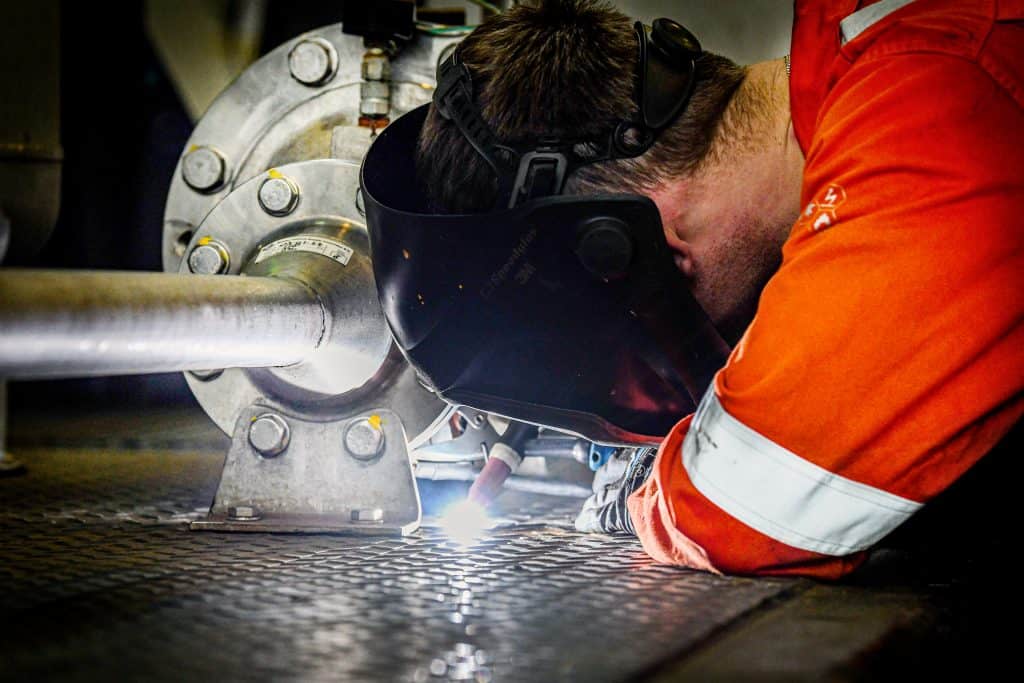
A thorough integrity program relies on using the right techniques to identify potential issues before they become critical failures. At Bakker Flow Services, our approach is built on a range of proven methods designed to give you a clear view of your equipment’s health. We ground our work in the hands-on services detailed in our maintenance and inspection support, ensuring you get reliable data every time.
Identifying surface breaking defects is a critical first step in preventing failures. We use several established non destructive testing (NDT) methods to assess the condition of your components without causing damage.
Some of the most significant risks to equipment integrity, such as internal corrosion or material degradation, are not visible from the outside. That is why our services include methods to measure the internal condition of your assets.
The ultimate confirmation of a component’s fitness for service is its ability to withstand operational pressures safely. Our pressure testing is performed within our ISO 9001 quality system and is DNV certified. We can test equipment in our workshop up to 22,000 psi, providing documented assurance that your assets are safe and ready for operation.
Effective equipment integrity management is about more than just performing tests. It requires careful planning, coordination, and documentation. This is where inspection activities connect with broader project management.
To ensure a smooth process, our team can provide the necessary planning and coordination support. Through our engineering and project management services, we handle work preparation, certificate management, and progress monitoring. This coordinated approach ensures that inspections are completed efficiently, results are documented correctly, and your project stays on schedule. By integrating the practical fieldwork with structured oversight, we help you maintain control and visibility throughout the entire process.
Choosing a partner for equipment integrity is a decision that directly impacts your safety, compliance, and operational uptime. While the industry explores new technologies, the core need for reliable, field-proven inspection and maintenance remains unchanged. By focusing on a foundational approach that delivers accurate data through certified methods, you create a trustworthy integrity program. This practical focus ensures that teams in the process industry have the confidence they need to make sound operational decisions and maintain asset reliability for the long term.
How do your inspection services fit into a larger Asset Integrity Management (AIM) program?
Our services provide the critical, foundational data acquisition step. We deliver the accurate and verifiable field data from inspections and tests that your broader AIM or Mechanical Integrity program needs to assess risk and plan maintenance effectively.
Can you perform inspections on site during a planned shutdown?
Yes, our services are designed to be flexible. We can perform inspections and maintenance on your site during planned turnarounds or in our own fully equipped workshop, depending on your project’s needs and schedule.
Are your testing procedures certified?
Yes, our quality management system is ISO 9001 certified, and our pressure testing services are DNV certified. These certifications ensure our procedures are standardised, repeatable, and provide the traceable results you need for compliance and auditing.
To ensure the reliability and safety of your process equipment, a partner with practical experience and certified expertise is essential. If you are ready to build a foundation of trust for your integrity program, contact us to discuss your maintenance and inspection needs.
Geothermal projects often require equipment that is not part of a standard field equipment fleet.
High temperatures, high pressures, high flow rates, dissolved gases, solids and demanding fluid chemistry can place specific requirements on the equipment used during well testing, commissioning, maintenance and other field operations.
At the same time, many of these requirements are project-specific. Equipment that is essential for a well test may have little use once the test is complete. Purchasing and maintaining a complete equipment fleet is therefore not always the most practical solution.
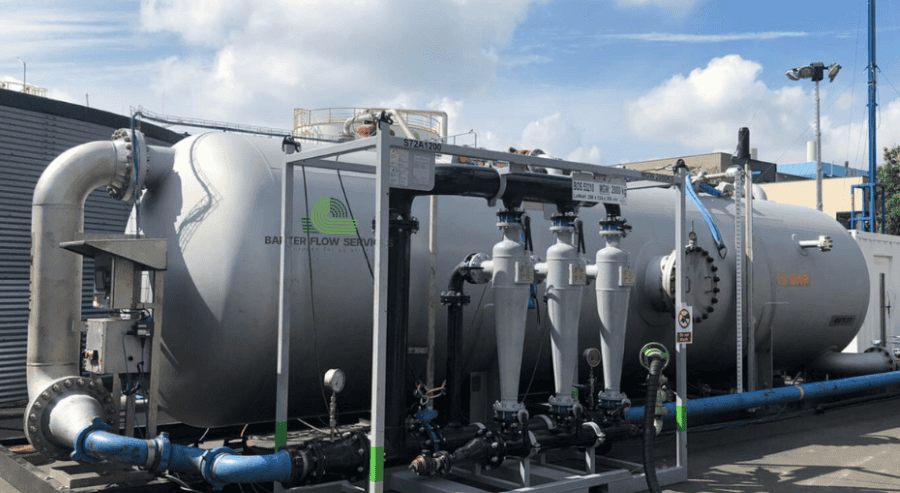
Bakker Flow Services provides specialised rental equipment for geothermal well testing and field operations. We combine equipment availability with engineering knowledge and practical field experience to help project teams configure the right setup for the job.
The starting point for any geothermal equipment selection is the well and the operation.
Flow rate, pressure, temperature, fluid composition, gas content and solids production all influence which equipment can be used safely and effectively.
These conditions can also change during an operation.
A geothermal well may produce a mixture of hot water and steam. Sand or other solids may be present. Dissolved gases may need to be separated before downstream processing or measurement. Temperature may need to be reduced before certain equipment can be used.
The equipment therefore needs to be selected as part of the complete process rather than as individual components.
Our rental fleet allows equipment to be configured around the requirements of the specific well and operation.
Well testing is one of the most equipment-intensive phases of geothermal development.
The test spread needs to safely handle the expected pressure, temperature and flow while providing controlled conditions for measurement and data collection.
Depending on the well and test objectives, a geothermal well test spread can include equipment such as:
The exact configuration depends on the well conditions and the information the test needs to generate.
Bakker Flow Services can support the complete equipment configuration, from individual rental components to an integrated geothermal well test spread.
Temperature is one of the characteristics that makes geothermal field operations different from many conventional well-testing applications.
High-temperature fluids influence equipment selection, measurement, materials and operating procedures. Cooling may also be required before fluids reach downstream equipment or measurement systems.
Heat exchangers can be incorporated into the test spread where temperature reduction is required. Their selection needs to take into account flow rate, inlet and outlet temperatures, pressure and fluid characteristics.
Similarly, degassing can be an important part of geothermal well testing. Dissolved gases released from hot geothermal fluids can affect flow behaviour, downstream equipment and measurement conditions.
A properly configured test spread needs to account for these effects from the beginning.
Geothermal fluids can contain suspended solids and mineral deposits that can create operational problems during testing.
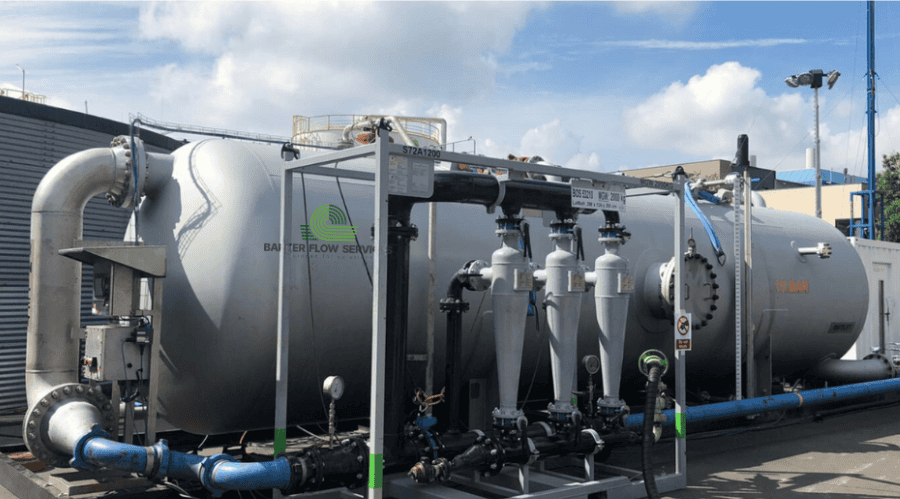
Solids can cause erosion, restrict flow and damage downstream equipment. Filtration and solids-management equipment can therefore be used to protect the test spread and maintain stable operating conditions.
Depending on the expected solids load and particle characteristics, the equipment configuration may include desanders, filters or other separation equipment.
The objective is to balance solids removal with the required flow capacity and pressure conditions of the operation.
Geothermal rental requirements do not necessarily end when the well test is complete.
Temporary equipment may be required during commissioning, maintenance, modifications, troubleshooting or other field activities.
For example, a project may need temporary flowlines while part of an installation is being modified. Additional processing equipment may be required during a specific intervention. A temporary sound-control solution may be needed during maintenance work.
Using rental equipment allows these requirements to be addressed without permanently expanding the site’s equipment inventory.
This can be particularly useful for projects where the requirement is temporary, uncertain or likely to change as the installation develops.
The value of rental equipment is not simply having a piece of equipment available.
The equipment needs to be suitable for the operating conditions and compatible with the rest of the system.
Flow paths, pressure ratings, connections, instrumentation, layout and operating procedures all need to be considered before mobilisation.
Bakker Flow Services can support this preparation through its engineering and project-management activities.
This allows equipment selection and system design to be considered together, rather than leaving the customer to determine how individual rental components should be integrated on site.
Engineering and project management
The equipment requirements of a geothermal project can change significantly between development phases.
During well testing, the project may require a complete high-pressure processing and measurement setup. During production, the requirement may be limited to specific equipment for maintenance or temporary operations.
Rental provides the flexibility to scale the equipment package according to the actual requirement.
It can also avoid the need for customers to purchase equipment that may only be used for a limited period.
For project teams, the advantages can include:
The right rental strategy is therefore not simply about reducing equipment cost. It is about having the right equipment available when and where it is needed.
Equipment requirements should be considered early, particularly for well testing and other operations with fixed mobilisation schedules.
Lead times, transport, inspection requirements, connections and site layout can all influence when equipment can be deployed.
Early planning gives the project team more time to verify the equipment configuration, identify missing components and prepare the site.
Bakker Flow Services can support this preparation by combining equipment supply with engineering and project coordination.
The result is a rental package that is considered as part of the field operation rather than simply delivered as a collection of separate items.
Geothermal operations require equipment that can perform under the conditions of the specific application.
But equipment alone is only part of the solution.
The practical experience to select, configure and deploy that equipment is equally important.
Bakker Flow Services combines specialised rental equipment, well testing and engineering support to help geothermal project teams prepare and execute field operations.
Whether you require a complete geothermal well test spread or a specific piece of temporary equipment, we can help determine what is required for the operation and how it needs to fit into the overall system.
A successful rental operation starts before the equipment arrives on site.
The well conditions need to be understood. The equipment needs to be correctly specified. The system needs to be configured. Connections and operating requirements need to be checked. And the equipment needs to be ready for the conditions it will encounter in the field.
That is the difference between simply renting equipment and providing a practical field solution.
Bakker Flow Services supports geothermal projects with:
Specialised rental equipment
Equipment for well testing, processing, solids management, flow handling and temporary field operations.
Geothermal well testing
Integrated equipment solutions for testing geothermal wells under demanding temperature, pressure and flow conditions.
Engineering and project support
Technical preparation and system configuration to ensure rental equipment fits the requirements of the operation.
Maintenance and inspection
Support for keeping critical equipment in suitable condition and ready for deployment.
The right equipment. Properly configured. Ready for the field.
What equipment can be rented for geothermal well testing?
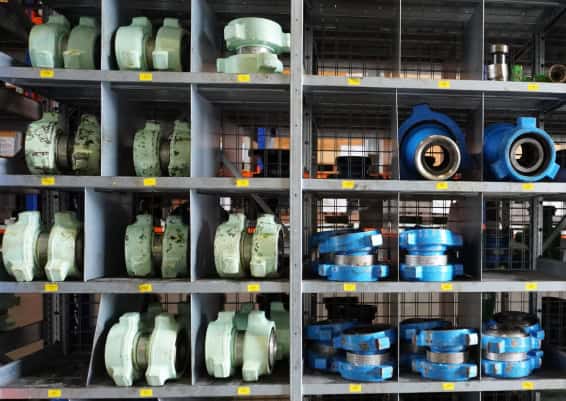
Depending on the project requirements, the rental package can include separators, choke manifolds, flowlines, degassing equipment, filtration and solids-management equipment, heat exchangers, surge vessels and measurement equipment.
The exact configuration depends on the well conditions and test objectives.
Can rental equipment handle high-temperature geothermal fluids?
Equipment selection needs to be based on the actual temperature, pressure, flow and fluid characteristics of the well. For geothermal applications, these conditions are considered when configuring the test spread and selecting the appropriate equipment.
Why rent geothermal equipment instead of buying it?
Rental can make sense when equipment is required for a limited period, when the required configuration varies between projects or when purchasing a complete fleet would result in equipment sitting unused between operations.
Can you supply a complete geothermal well test spread?
Yes. Bakker Flow Services can configure integrated equipment packages for geothermal well testing, including separation, degassing, filtration, flow handling and supporting equipment, depending on the requirements of the project.
Do you provide engineering support with rental equipment?
Yes. Engineering and project support can be used to determine how equipment should be configured and integrated into the overall test or field system.
Can rental equipment also be used after commissioning?
Yes. Temporary equipment can be useful during maintenance, modifications, commissioning, troubleshooting and other operational activities where permanent equipment is not required.
How early should we involve you in a geothermal well test?
As early as possible. Early involvement allows the well conditions, test objectives, equipment requirements, site layout, connections and mobilisation requirements to be considered together. This reduces the risk of discovering equipment or configuration issues shortly before the operation be
Elevate your projects with Bakker Flow Services, the partner for high-quality products and services in the geothermal, oil & gas and process industry sector.